

It Makes Sense… Until It Doesn’t
On how quickly we turn every moment into something we understand

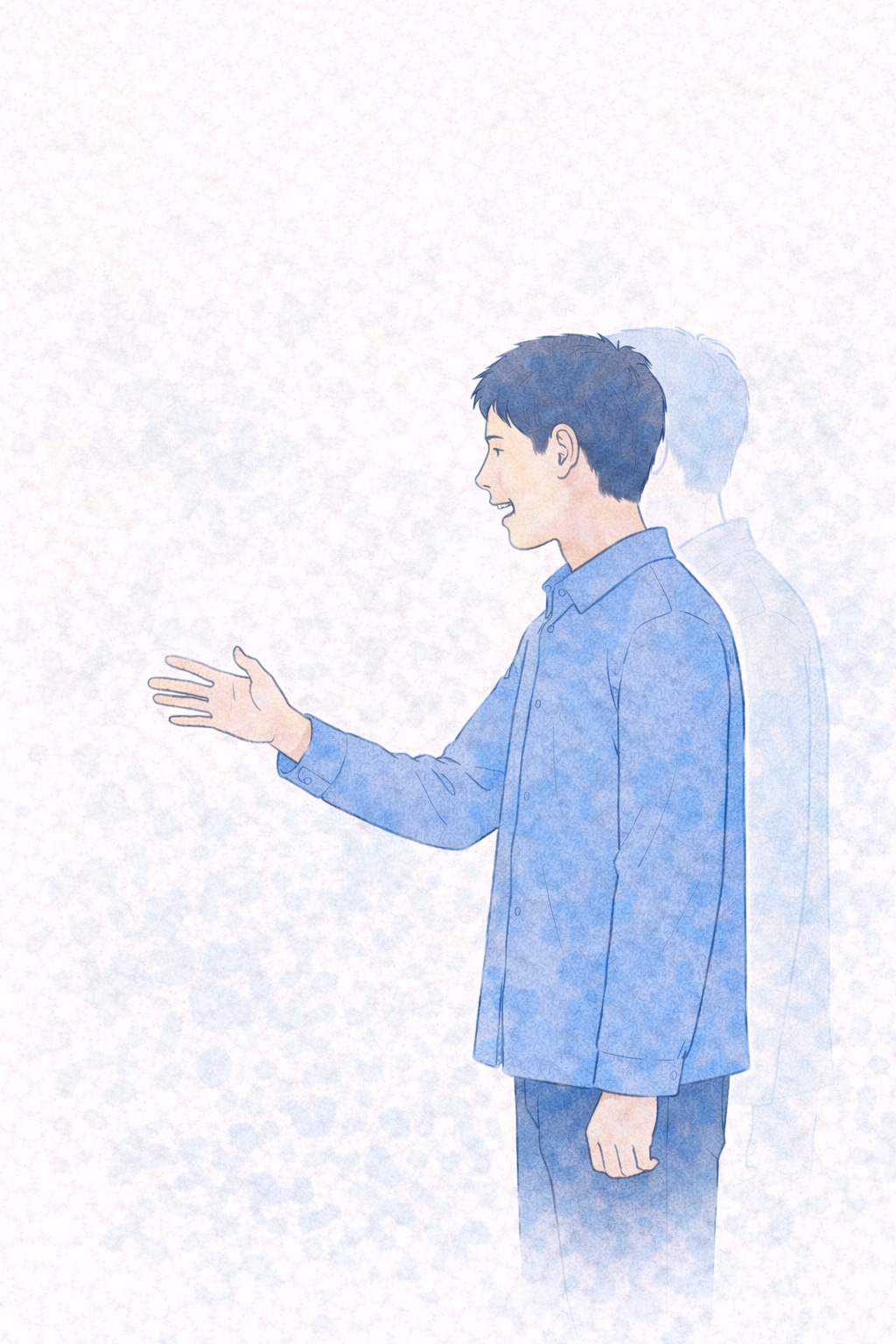
“We are so accustomed to disguise ourselves to others that in the end we become disguised to ourselves.” — Blaise Pascal
Something happens. You say something you didn’t quite mean. Or don’t do something you said you would. It’s small. Nothing dramatic.
And almost immediately, there’s a reason for it. Not something you search for. It’s just there. It fits. It explains. It softens the edge of what just happened.
So you move on.
There’s no pause to question it.
Why would there be?
The excuse feels natural. It arrives with confidence, as if it had been there all along, and maybe it was.
But every now and then, briefly, almost by accident, you notice the timing. How quickly it comes. How neatly it settles things.
The thing happens. And then…the story.
So close together, it’s hard to tell where one ends and the other begins. For a second, there’s a small, almost uncomfortable question:
Did it really happen that way…
or is that just the version that makes it easier to move on?
It’s easy to miss that. Easy to take the excuse at face value and keep going.
Because nothing about it feels forced. If anything, it feels like clarity. You know why you did what you did. You understand yourself. There’s a reason for it. And having a reason feels like being in control.
But if you stay with it, just a little longer, something starts to feel slightly off.
Not the explanation itself. The timing of it.
It arrives too quickly. Too cleanly. As if it’s less about understanding what happened and more about making sure it makes sense.
Because the excuse or explanation isn’t just describing the moment. It’s shaping it, smoothing it, and turning something a little unclear into something that feels complete.
Not necessarily more true.
Easier to live with.
And it’s not that the explanation is false. Most of the time, it isn’t.
You were tired.
It wasn’t the right moment.
It didn’t feel important enough.
All of that can be true. But it might not be the whole truth.
Because something else also happened. Something less comfortable. Less clear. And that part doesn’t always make it into the story.
So the explanation does something subtle. It doesn’t lie. It selects. It keeps what fits. Leaves out what doesn’t.
And in doing that, it turns the moment into something that feels done. Not because it is, but because it no longer asks anything of you.
And it doesn’t stop there. Because once the moment is explained, it becomes part of something bigger.
A pattern. A sense of who you are.
“I’m just like this.”
“This is how I handle things.”
It feels consistent. Stable. Like something you can rely on. But those conclusions are built on explanations that arrived after the fact.
One moment, interpreted a certain way. Then another. And another. Until it starts to feel like a fixed identity. Not because it was always true. But because it’s been consistently explained that way.
And somewhere in that process, something gets lost.
The ability to see the moment as it was.
Before it was shaped, softened, and made sense.
You can catch it sometimes. Right as it’s happening.
A reaction, a choice, and almost at the same time, the explanation begins to form. Not fully. Just the outline of it. For a moment, there’s a slight tension between what happened and how you’re about to describe it.
It’s subtle. Easy to smooth over. Easy to complete the story and move on. But if you stay there, you can feel it.
The difference between the moment and the version that’s about to replace it.
It’s not a big gap. But there is a gap.
Maybe this is just what the mind does.
It organizes. It explains. It keeps things moving.
There’s something useful in that. But it also means something else.
That we rarely stay with a moment long enough to really see it.
Because it becomes something we “understand” almost immediately, and once we understand it, we’re done with it.
There’s nothing left to question. Nothing left to notice.
So maybe the problem isn’t what we do.
Or even what we think about it.
Maybe it’s how quickly we move past it.
How fast the story arrives and how easily we accept it.
Because if everything already makes sense, there’s very little reason to look any closer.
And maybe that’s what keeps most things exactly as they are.
Recommended Reading
“The Elephant in the Brain” by Kevin Simler and Robin Hanson
A slightly uncomfortable read in the best way. It explores how much of what we do is driven by hidden motives, and how good we are at explaining things in ways that feel right, even when they’re not the full story.